
"Chinese parasol tree"
50000 article(s) found

The ancient coffee forest in China
With the unveiling of the mysterious veil of the century-old history of Chinese coffee, this unknown and isolated mysterious village has come into people's view for the first time. At the same time, Dehong Hougu Coffee Co., Ltd., the only national leading enterprise in China's coffee industry, took immediate action as soon as it was informed. Through a large number of investigations and visits, the representative of Hougu Coffee finally found the oldest in China.

Jugula, the secret territory of Yunnan, the birthplace of Chinese coffee
Jugula, the secret place where Chinese coffee originated, is a distant place and a story that has been around for a long time. Zhu Kula Yi language meaning: tortuous mountain road. In the deep mountains in the west of Binchuan County, Yunnan Province, there is a little-known Yi shanzhai-Zhu Kula, which has existed quietly and full of vitality for hundreds of years in the deep gorge of Baizhang River, a tributary of the Jinsha River. So far

Introduction of Chinese Coffee beans the characteristics of Hainan Coffee Hainan Coffee
White jade carved green leaves, coral beads United, braving the rain to see the coffee, lingering can not bear to return. The flowers often bring rain, and the smell is as strong as milk. The mountain birds call at night and pick up fallen pearls in the Ming Dynasty. This is a "Bodhisattva Man" depicting the coffee garden. Anyone who has been to the coffee garden will applaud the author's poem. The scenery of the coffee garden on Hainan Island is charming, and the coffee produced in Hainan Island is also fragrant.

True Blue Mountain Coffee at an altitude of 1800? Coffee trees of this height can hardly survive.
Recently, when I looked up the information on the Internet, I saw a lot of information saying that on the top of more than 1800 of the Blue Mountains, there is only one manor, that is, Amber, which is of Chinese descent. The owner of the manor is Lyn (Lin), originally from Guangdong, China. I think there may be a bit of a mistake here, because coffee trees can hardly survive at a height of 1800 meters. Jialumeng Coffee once asked Zhuang during its meeting in 2007.
Chinese Coffee History Chinese Tea and Western Coffee Culture
(3) the unity of heaven, earth and man in tea culture and coffee culture the dichotomy of tea culture is the Taoist theory of the unity of heaven, earth and man. Taoism believes that heaven, earth and man are equal and should adapt to nature and take the initiative to understand the law, so that people can get the greatest satisfaction. Tea comes from the forest of the mountains, receives the essence of heaven and earth, and bears the rain and dew of abundant soil, which contains Taoism's indifference, serenity and return to nature.

Donkey, Donkey Bar.
Recommended reason: the old bungalow in the overseas Chinese Town Creative Park is renovated into an old bungalow surrounded by plants and flowers. The wooden decoration with a small garden is very conspicuous in the creative park. It is not difficult to find him even when he comes to the creative park for the first time. The interior is full of pastoral style, while the outdoor seat is my favorite. Natural lighting, there is one outside.
Where was coffee first grown in China? China Yunnan Coffee Yunnan purchases Coffee Raw Materials
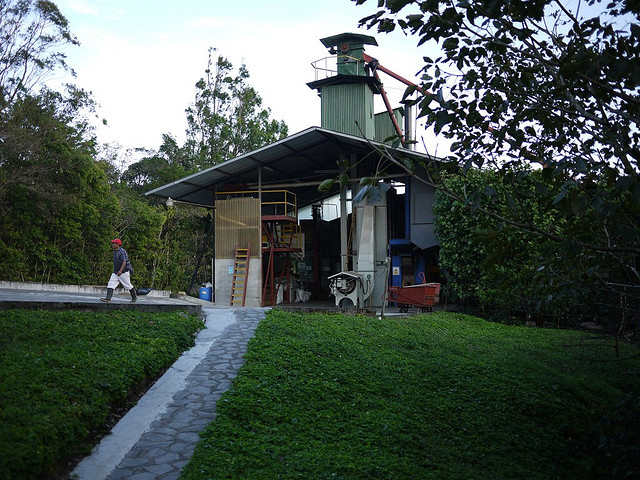
Where was coffee first grown in China? According to historical materials, in 1902, a French missionary, a priest named Tian Deneng in Chinese, introduced coffee trees into a village called Zhu Kula in Binchuan County, Dali, Yunnan Province, and successfully planted them. Since then, coffee trees have been introduced to all parts of Yunnan, and have achieved great success. Therefore, the ancestor of Chinese coffee species is in Zhu Kula village, but it is a pity.

Chinese Coffee Market and Yunnan Coffee Fine Coffee knowledge Yunnan coffee
Boutique coffee is fresh coffee. Whether it's food or drink, of course, the fresh the better, and so is boutique coffee. High-quality coffee should keep the coffee beans fresh before making, including the preservation of baked beans, and grind the coffee beans into powder before making, which is also to retain its original and best flavor. And the way of making hand-made coffee is such a way to make high-quality coffee.

What's the difference between Indian black tea and Chinese black tea? which is better? What's the taste of Assam black tea?
There are numerous changes in the widely defined category of fully oxidized tea. The taste of black tea varies according to the specific environmental characteristics of the local soil, the weather, the maturity of plants at harvest, and the way the tea is picked and produced. But the unique history of tea trade has also shaped the pattern of complete oxidation of tea, which is divided into two distinct families: from China and from India.

The origin of coffee and when was it introduced into China?
The word coffee comes from the Greek word Kaweh, which means strength and enthusiasm. Coffee tree is an evergreen shrub of Capsaceae. Daily coffee is made from coffee beans combined with a variety of cooking utensils, and coffee beans refer to the nuts in the fruit of coffee trees, which are then roasted with appropriate roasting methods. In ancient China, Shennong tasted all kinds of herbs and recorded them one by one.
Chinese Coffee trees planted in Foshan
This is the first time I have heard that Foshan can also grow coffee, and the dream of growing coffee has come true in the 74-year-old Feng family. Lao Feng, who came from farming, began to grow coffee under the guidance of his son Feng Shilin, but now he no longer works in the fields, and planting coffee trees has become his playmate after he entered his old age. He grows his own coffee, grinds coffee beans and invites neighbors to drink home-grown coffee drinks. Today, a reporter
When was coffee introduced into China? Spread and Development of Coffee in China
The word coffee comes from the Greek word Kaweh, which means strength and enthusiasm. Coffee tree is an evergreen shrub of Capsaceae. Daily coffee is made from coffee beans combined with a variety of cooking utensils, and coffee beans refer to the nuts in the fruit of coffee trees, which are then roasted with appropriate roasting methods. In ancient China, Shennong tasted all kinds of herbs and recorded them one by one.

Recommended by special cafes in Beijing
Coffee has two temperaments, one as fanatical as wine, the other as introverted as tea, thick but not thick, fragrant and slightly bitter. Cafes in Beijing, especially those in hutong, are more inclined to the second temperament. In the warm afternoon, order a cup of coffee and hide in the depths of the hutong waiting for the time and years. Outside the landing window, the sun shines on the vicissitudes of the old Beijing Hutong, making people feel wrong in a trance.

China Coffee Living Fossil "Zhu Kula" Opens Image Store to Promote Brand Construction
Professional barista exchange, please pay attention to coffee workshop (Weixin Official Accounts cafe_style), known as the living fossil of Chinese coffee, Zhukula Coffee Museum Store opened in Yunnan Province Museum, marking an important step in brand construction. Zhukula Village, Binchuan County, Yunnan Province, is an Yi village on the bank of Jinsha River tributary. hundred years ago

15 Health-preserving functions of Coffee from the Angle of traditional Chinese Medicine
Coffee is an imported product, when Western culture collides with traditional Chinese medicine culture, let's see how traditional Chinese medicine feels the pulse of coffee! The coffee bean is taken from the fruit of the coffee tree. It is red and red in color, enters the heart, is bitter, and merges into the path of the large intestine. The taste is bitter and bitter, fried and scorched. Glycol has the effect of nourishing and relieving pain, relieving pain, diverging pungent flavor, passing through the brain-blood barrier and treating surface wind.
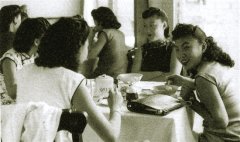
The first cafe in China appeared in Guangzhou. Lu Xun doesn't really like coffee.
Communication of professional baristas Please follow the girls of the Republic of China who drink coffee in the coffee workshop (Wechat official account cafe_style) A silver coffee pot made for export in China at the end of the Qing Dynasty. The coffee mugs of the last years of the Republic of China are printed with the head of the Queen of England and the advertising of canned coffee during the period of the Republic of China. Today, let's talk about coffee, a petty-bourgeois drink popular all over the world. There are not many drinks popular all over the world.
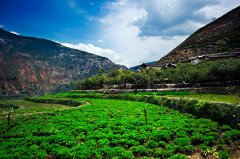
Yunnan Coffee A hundred-year Coffee Legend in Zhukula Village, Dali, Yunnan
Zhu Kula, located in the depths of the mountains in the northeast of Pingchuan Town, Binchuan County, Yunnan Province, is the junction of Chuxiong, Dali and Lijiang, surrounded by the Yupao River, a tributary of the Jinsha River. Due to inconvenient transportation, Zhu Kula is almost isolated from the rest of the world, so it is a little-known Yi shanzhai. When it comes to the history of Chinese coffee, we have to mention Zhukula Coffee in Dali, Yunnan.

Dahongpao belongs to black tea or oolong tea? How much is the ten most expensive tea Dahongpao?
Dahongpao is a Chinese oolong tea grown in Wuyi Mountain, China. This tea is Wuyi rock tea, also known as Dahongpao tea. This type of oolong tea is one of the most expensive teas in the world and is usually reserved for welcoming elite guests. It is classified as one of China's famous teas and one of the four major tea clusters. according to

Traditional Chinese medicine talks about coffee and sees how to feel the pulse of coffee.
Coffee is an imported product, when Western culture collides with traditional Chinese medicine culture, let's see how traditional Chinese medicine feels the pulse of coffee! The coffee bean is taken from the fruit of the coffee tree. It is red and red in color, enters the heart, is bitter, and merges into the path of the large intestine. The taste is bitter and bitter, fried and scorched. Glycol has the effect of nourishing and relieving pain, relieving pain, diverging pungent flavor, passing through the brain-blood barrier and treating surface wind and heat.

Ranking of domestic coffee brands-development trend of Chinese coffee beans-reasons for cheap sale of domestic coffee beans
Professional coffee knowledge exchange more coffee bean information please follow the coffee workshop (Wechat official account cafe_style) Pu'er domestic coffee bean output reached the highest in 2016, reaching 900000 bags. The coffee grown in Pu'er has a short history and only became popular in the 1980s. Most of the varieties should be Kadim. The second and third in Baoshan are Lincang, the fourth is Dehong, and the fifth is Banna. Red River